
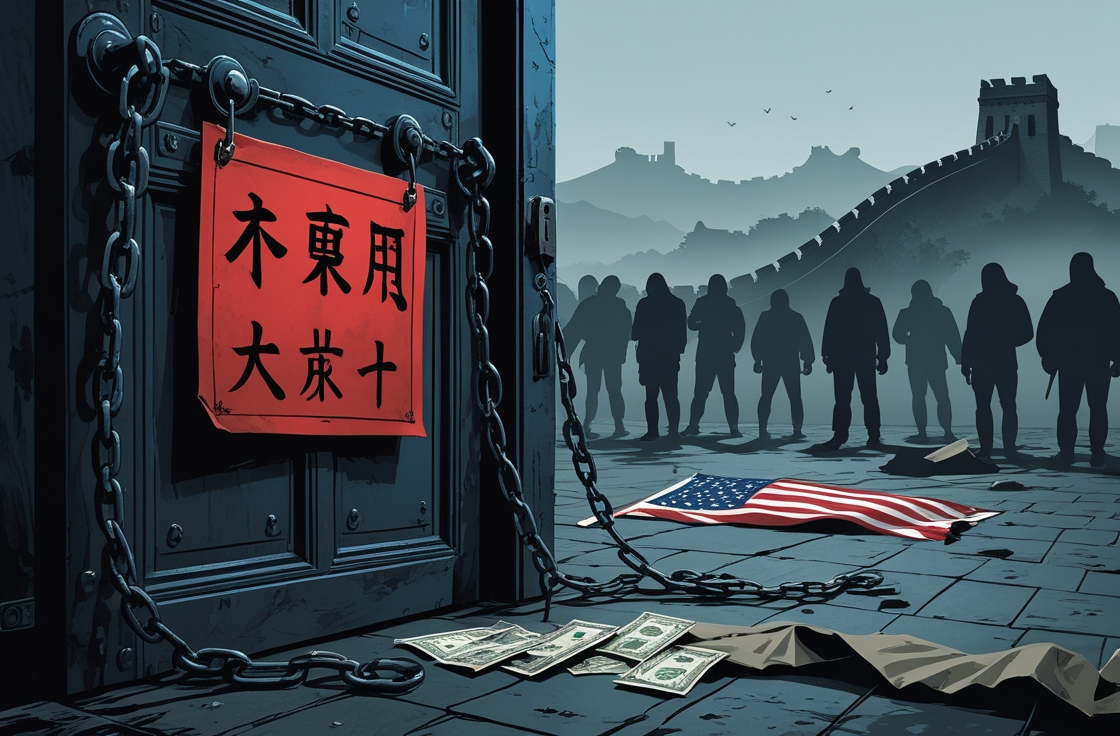
Dozens of non-governmental organizations monitoring dissent, human rights, and labor rights in China have laid off employees after being forced to suspend operations due to the freezing of foreign aid by U.S. President Donald Trump, observers report.
These groups play a key role in documenting President Xi Jinping’s long-standing repression of minorities, human rights defenders, and lawyers. Last year, the EU expressed concern over the "very serious" human rights situation in China, particularly in its Xinjiang, Tibet, and Hong Kong regions.
"Many of these NGOs were surprised — they thought that due to the competition between the U.S. and China, even if funding was cut, Chinese programs would remain," said Maya Wang, Deputy Director of Human Rights Watch for China.
"The suspension of U.S. funding for these purposes will essentially deal a very heavy blow to global civil society."
Among the affected organizations is the American Freedom House, which stated that its China Dissent Monitor project, carried out through researchers in Taipei and maintaining a public database of Chinese protests, was forced to halt all research due to the freeze on funding.
Freedom House received $80 million in grants from the U.S. government in 2024, which accounts for 88% of its annual revenue, according to the organization’s financial report.
The dissent database, which tracks more than 7,000 protests since 2022, has become an important tool for journalists and researchers on China, as the government has tightened control over protests amid an economic slowdown and a sharp rise in youth unemployment.
"The relevant reorganization of U.S. institutions is an internal matter for them," the Chinese Ministry of Foreign Affairs said in a comment to Reuters.
According to Wang from HRW, the freeze has impacted dozens of similar groups focused on China, as both NGOs and grassroots groups are working on projects funded by the same grants.
Numerous Chinese laws effectively prohibit domestic NGOs from receiving foreign funding and severely restrict the activities of foreign NGOs in China.
Official data shows that the United States has pledged to allocate $10.7 million in foreign aid to address China-related issues in 2024, mostly through USAID. Nearly half of this amount, or $5.2 million, went to projects related to democracy, human rights, and governance.